
Platelet-Rich Plasma Treatment for Hair Loss Alopecia NYC: Benefits, Process & Real Results
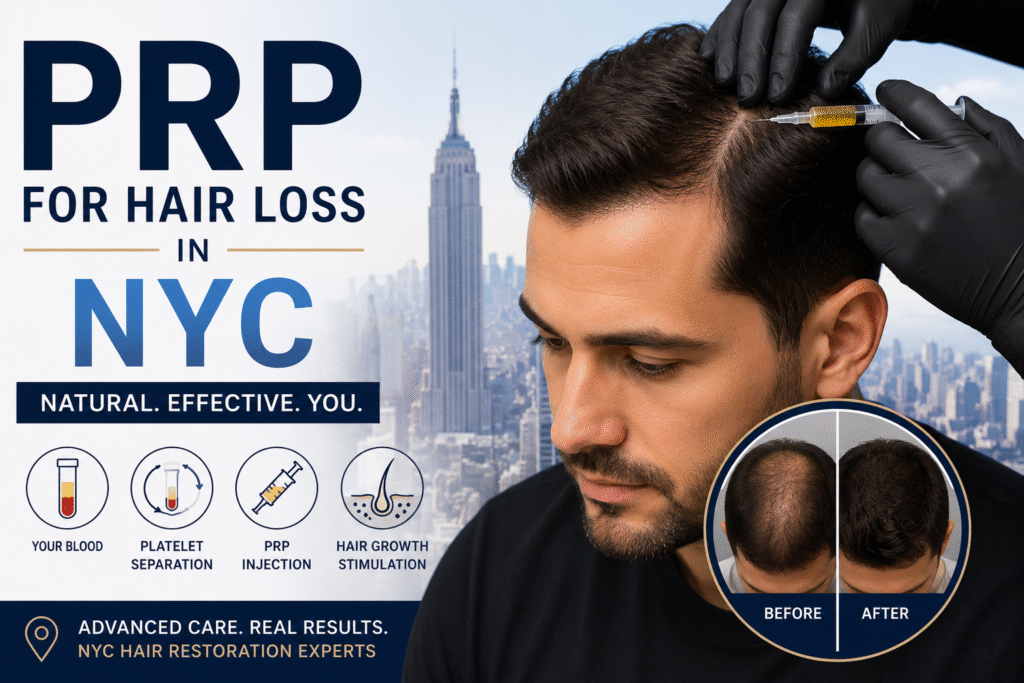
Platelet-Rich Plasma Treatment for hair loss is a non-surgical treatment that uses concentrated growth factors from your own blood to stimulate dormant follicles and improve hair density. Most patients need 3 to 4 sessions spaced 4 to 6 weeks apart, with noticeable improvements appearing within 6 to 8 weeks of the first treatment.
Hair loss rarely happens overnight. It’s a gradual process, one that’s easy to dismiss at first and harder to reverse the longer it goes unaddressed. By the time most people seek treatment, they’ve already lost more than they realize.
Platelet-Rich Plasma Treatment changes that equation. It’s one of the most clinically supported non-surgical options available today, and at Dr. Dele-Michael’s NYC dermatology practice, it’s delivered by a board-certified dermatologist who understands your scalp, your hair type, and the specific biology behind your hair loss.
Here’s everything you need to know about PRP for alopecia, including how it works, what the treatment feels like, and the results you can realistically expect.
What Is PRP Therapy for Hair Loss?
Platelet-rich plasma therapy is a medical treatment that uses your own blood’s concentrated growth factors to stimulate hair growth in thinning areas. The logic is straightforward. Platelets contain proteins that the body uses to heal damaged tissue. When extracted, concentrated, and injected into the scalp, those same proteins can reinvigorate weakened or dormant follicles.
No synthetic substances. No foreign materials. Just your own biology, redirected.
PRP is most effective for androgenetic alopecia, the hormonal form of hair loss that affects both men and women. Research confirms its impact. A systematic review and meta-analysis published in the Journal of Dermatological Treatment found that Platelet-Rich Plasma Treatment increases both hair density and hair thickness. A separate randomized placebo-controlled trial concluded that PRP injections show clear positive effects on pattern hair loss with an absence of major side effects.
It works best in the early to moderate stages of hair loss, when follicles are still present but producing thinner, weaker strands. Once a follicle has fully stopped producing hair, PRP cannot restore it.
What Are the Benefits of PRP Hair Restoration?
PRP stands out from other hair loss treatments for several reasons:
Non-surgical and low risk. There are no incisions, no general anesthesia, and no recovery downtime. Because Platelet-Rich Plasma Treatment uses your own blood, the risk of allergic reactions or rejection is minimal.
Works for men and women. Clinical studies support Platelet-Rich Plasma Treatment for both male and female pattern hair loss, making it one of the more versatile options available.
Complements other treatments. PRP pairs well with finasteride, minoxidil, and low-level laser light therapy. For patients pursuing NeoGraft hair transplant, PRP can support healing and protect surrounding follicles.
Addresses hair loss at the follicular level. Rather than masking the problem, PRP improves the cellular environment around the follicle, creating conditions more conducive to healthy, sustained growth.
At Dr. Dele-Michael’s NYC practice, PRP hair restoration starts at $600 per session.
What Does the PRP Treatment Process Look Like, Step by Step?
A single Platelet-Rich Plasma treatment session takes between 45 minutes and one hour from start to finish. Here is what to expect.
Step 1: Blood draw. A small amount of blood is collected, typically around 30 to 60 milliliters. The process feels identical to a routine blood test.
Step 2: Centrifuge processing. The blood is placed in a specialized centrifuge for approximately 10 minutes. This separates the platelets from other blood components and produces a concentrated platelet solution rich in growth factors.
Step 3: Scalp preparation. While the blood is processing, a topical numbing agent is applied to the scalp to minimize discomfort during injections.
Step 4: Targeted injections. Using fine needles, the concentrated PRP is injected into the areas of the scalp where thinning is most noticeable. Most patients describe the sensations as small pinches that subside quickly.
Step 5: Recovery. There is no real downtime. Most patients return to their normal activities immediately. Mild redness or tenderness in the treated area is common for a day or two.
When Can You Expect to See Results from PRP?
Platelet-Rich Plasma Treatment works gradually. It supports the body’s natural hair growth cycle rather than forcing rapid change. That means patience is part of the process.
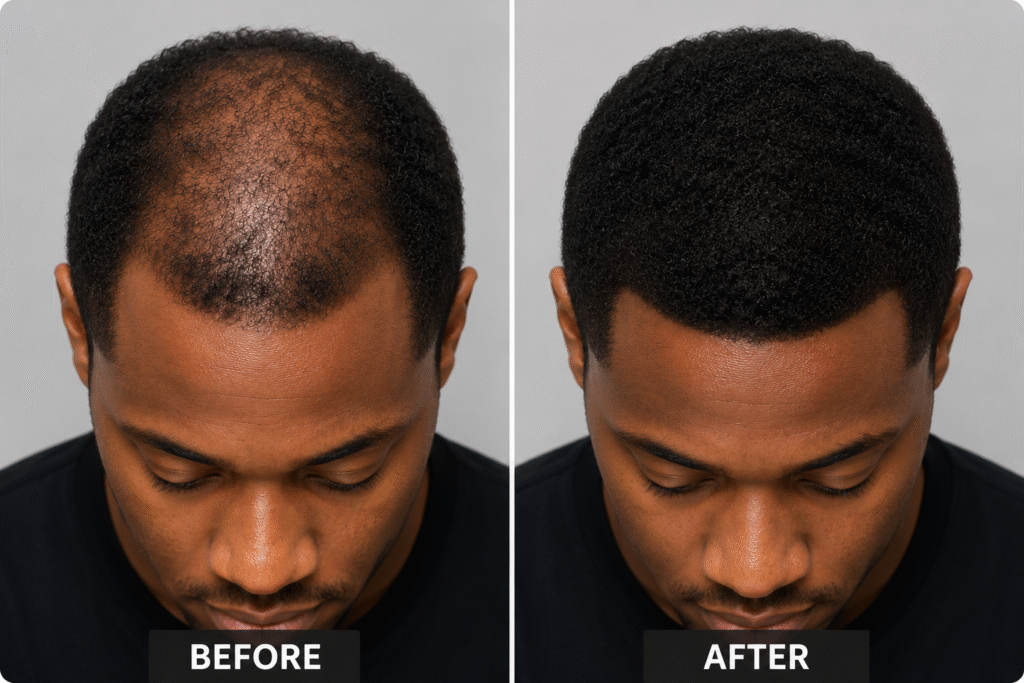
Most patients notice early improvements in hair texture and thickness around 6 to 8 weeks after their first session. More significant changes in hair density typically become visible after 3 to 4 months of consistent treatment. Peak results generally appear between 6 and 9 months after beginning the full course of sessions.
A standard treatment plan involves 3 to 4 sessions spaced 4 to 6 weeks apart, followed by maintenance treatments 2 to 4 times per year to sustain results.
One early signal the treatment is working: existing hair often feels stronger and appears shinier before new growth becomes visible. That improvement in hair quality is a reliable indicator that follicular activity is increasing.
Who Is PRP Hair Treatment Right for?
Platelet-Rich Plasma Treatment is a strong option for patients who:
- Are experiencing early to moderate hair thinning and want to preserve what they have
- Prefer a non-surgical, non-pharmacological approach
- Have tried or are currently using medications and want to enhance their results
- Are preparing for or recovering from a hair transplant procedure
It is not the right choice for patients who have already lost the follicles entirely. In those cases, a procedure like NeoGraft may be more appropriate. Dr. Dele-Michael assesses each patient individually and builds a treatment plan based on what is actually happening at the scalp level.
Why Choose Dr. Dele-Michael for PRP Hair Restoration in NYC?
Most hair loss research has historically centered on lighter skin tones and straighter hair textures. For patients with hair and skin of color, finding a dermatologist who truly understands that gap is not a small thing.
Dr. Dele-Michael’s NYC practice was built with that knowledge gap in mind. As a board-certified African American dermatologist with over a decade of experience, Dr. Dele-Michael specializes in the skin and hair concerns that other practices often overlook. Every PRP treatment is delivered with a deep understanding of diverse scalp types, hair textures, and how alopecia presents across different genetic backgrounds.
That expertise shapes everything, from diagnosis to treatment planning to the way results are evaluated.
Frequently Asked Questions
Is PRP for hair loss painful?
Most patients describe the injections as small pinches or mild stinging that fades quickly. Clinicians apply topical numbing agents beforehand to keep discomfort manageable. Mild tenderness in the treated area may last a day or two post-treatment.
How many PRP sessions will I need?
Most treatment plans involve 3 to 4 initial sessions, spaced 4 to 6 weeks apart. Doctors typically recommend maintenance treatments 2 to 4 times per year to sustain results.
Can PRP be combined with other hair loss treatments?
Yes. PRP works well alongside finasteride, minoxidil, and low-level laser light therapy. It is also commonly used to support recovery and protect follicles after a NeoGraft hair transplant.
How much does PRP hair restoration cost at Dr. Dele-Michael’s practice?
PRP hair restoration starts at $600 per session at Dr. Dele-Michael’s NYC dermatology practice.
How do I know if PRP is right for my type of hair loss?
The only way to know is through a proper diagnosis. Hair loss can stem from multiple causes, including hormonal changes, iron deficiency, thyroid dysfunction, and scalp inflammation. A board-certified dermatologist will examine your scalp, review your health history, and confirm the underlying cause before recommending treatment.
Ready to Restore Your Hair?
The sooner you address hair loss, the more options you have and the better your outcomes will be. PRP is a proven, low-risk treatment, but it works best on follicles that still have life in them.
Book a consultation with Dr. Delemichael and get a personalized plan from a dermatologist who understands your hair.