
Male Pattern Baldness Treatment NYC: Everything You Need to Know

Male pattern baldness is more common than most men realize. It affects up to 50% of men by age 50 and up to 80% by age 80. That makes it one of the most widespread conditions men face, yet it’s also one of the least understood when it comes to what actually works.
The good news? It’s treatable. And the earlier you start, the more you can preserve.
At Dr. Dele-Michael’s NYC dermatology practice, hair loss is one of the most common concerns patients present with. With the right diagnosis and a personalized plan, most men can slow the process significantly, and many see real regrowth.
What Causes Male Pattern Baldness?
Male pattern baldness, clinically known as androgenetic alopecia, is driven by two things: genetics and a hormone called DHT (dihydrotestosterone). DHT is a byproduct of testosterone. In men who are genetically predisposed, DHT binds to hair follicles and triggers a process called miniaturization; follicles gradually shrink, producing thinner and shorter strands with each cycle, until they stop producing visible hair altogether.
The classic pattern starts at the temples or crown and progresses outward. It can begin as early as your 20s, and it tends to accelerate over time without intervention.
This is why diagnosis matters. Hair loss can also be caused by thyroid issues, iron deficiency, scalp inflammation, or stress-related shedding — none of which respond to the same treatments. Getting it right from the start saves time and protects the follicles you still have.
Male Pattern Baldness Treatment Options at Dr. Dele-Michael’s NYC Practice
There is no one-size-fits-all fix. The right approach depends on how much hair you’ve lost, your hair type, your health history, and your goals. Here is a breakdown of the main options available at Dr. Dele-Michael’s NYC practice.
Finasteride
(prescription pill) blocks DHT at the hormonal level, addressing the root cause of follicle damage rather than just the surface symptoms. In clinical studies of nearly 1,900 men, 86% maintained or increased their hair count after 12 months. It typically takes about four months to notice early changes, with full results taking up to a year. Finasteride requires long-term use; stopping it allows DHT to normalize within about two weeks, and hair loss usually resumes within 12 months of discontinuation.
Minoxidil
(topical, over the counter) stimulates follicles and extends the active growth phase of the hair cycle. It doesn’t target DHT directly, but it works through a different mechanism that complements finasteride well. The 5% formulation is FDA-approved for men and has shown meaningful results in one large study, 62% of patients saw their hair-loss areas shrink after a year of use. Many users notice early improvements by the second month.
PRP Therapy
It uses concentrated growth factors from your own blood, extracted and injected directly into thinning areas of the scalp. This reinvigorates sluggish follicles and supports healing at the scalp level without any synthetic substances. It’s non-pharmacological, carries a low risk of adverse reactions, and works well as a standalone treatment or alongside prescription medications. At Dr. Dele-Michael’s practice, PRP hair restoration starts at $600.
Low-Level Laser Light Therapy (LLLT)
It is an FDA-approved, non-invasive treatment that uses controlled wavelengths of light to stimulate follicular activity and improve scalp circulation. Two randomized controlled trials showed increased hair density over 24 to 26 weeks of treatment. It’s painless, effective for early-stage thinning, and often used after procedures to protect and extend results. Starting at $600 at Dr. Dele-Michael’s NYC practice.
Eurothreads
It is an in-office treatment that uses a thread-based technique to boost scalp circulation and encourage follicular activity. It’s best suited for men who are just beginning to notice thinning and want to start a hair restoration plan at an accessible cost. Starting at $500, it’s a low-barrier entry point into expert-led care.
NeoGraft Hair Transplant
This is a permanent, minimally invasive follicular unit extraction (FUE) technique that relocates healthy follicles from a donor area to thinning or balding regions with no linear scarring. A single session can transplant between 1,000 and 2,000 follicles, with results fully visible at five to six months. It’s best suited for men with more significant hair loss, and it’s the only treatment on this list that delivers permanent density. Starting at $2,500 at Dr. Dele-Michael’s practice.
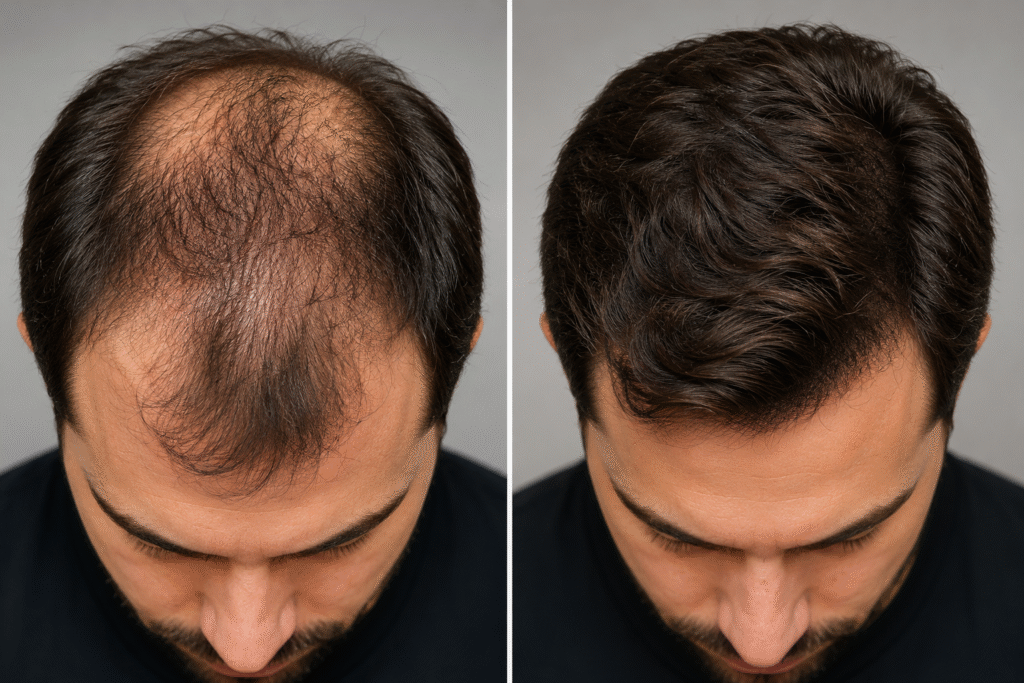
Can Multiple Treatments Be Combined?
Yes, and in many cases, combining treatments yields significantly better results than any single approach.
Finasteride and minoxidil work through different mechanisms, making them a natural pairing for men with moderate hair loss. PRP and LLLT complement each other well, especially as post-procedure support. Doctors often advise NeoGraft patients to use finasteride before and after surgery to protect surrounding non-transplanted follicles from ongoing DHT-driven miniaturisation.. A dermatologist can design the right combination based on your specific pattern of loss and goals.
Why See a Dermatologist Instead of Going the Telehealth Route?
Telehealth platforms can issue a finasteride prescription quickly. But issuing a prescription is not the same as providing care.
Effective treatment requires an accurate diagnosis first. If iron deficiency or thyroid dysfunction causes your hair loss instead of DHT, finasteride will not help, and each week of delay may reduce the chances of follicle recovery. A board-certified dermatologist examines your scalp directly, reviews your health history, rules out other causes, and builds a plan around what is actually happening not a generic protocol.
Getting that right from the beginning is the most important investment you can make in your hair.
Why Patients with Skin and Hair of Color Choose Dr. Dele-Michael
Most hair loss research has historically focused on lighter skin tones and straighter hair textures. Patients with skin of colour have often received care within a treatment landscape that clinicians and researchers did not design with their biology in mind.
Dr. Dele-Michael built his NYC practice to change that. With over a decade of experience as a board-certified African American dermatologist, her mission is clear: fill the knowledge gap in caring for skin and hair of color. Our team delivers every treatment with a deep understanding of diverse scalp types, hair textures, and the unique ways androgenetic alopecia presents across different backgrounds.
This expertise is especially critical for NeoGraft. Incorrect technique on darker skin can lead to hyperpigmentation, scarring, or an obviously artificial hairline. At Dr. Dele-Michael’s practice, patients with skin of color receive results that look and grow like their own hair — because they are.
Quick FAQs
When should I start treatment?
As early as possible. Follicles in early miniaturization can often recover with the right treatment.Doctors cannot medically restore follicles that have completely stopped producing hair; they can only replace them through hair transplantation.
Can treatments be combined?
Yes. Doctors commonly prescribe finasteride and minoxidil together to treat hair loss. PRP pairs well with LLLT. Doctors often recommend finasteride before and after NeoGraft to protect the surrounding hair.
How long until I see results?
Finasteride and minoxidil: early changes in two to four months, full results up to 12 months. PRP and LLLT: noticeable changes over 24 to 26 weeks. NeoGraft: full results visible at five to six months post-procedure.
What does treatment cost at Dr. Dele-Michael’s NYC practice?
Eurothreads from $500, PRP therapy and LLLT from $600 per session, NeoGraft from $2,500. Prescription medication costs vary depending on pharmacy and insurance.
Is treatment right for me if I have skin of color?
Yes. Dr. Dele-Michael’s practice specializes in hair of color and offers inclusive, expert-led care designed around the full spectrum of skin tones and hair types.
Ready to Start?
Hair loss moves slowly at first then faster. The sooner you get a personalized plan from a specialist who genuinely understands your hair, the more options you have and the better your results will be.
Book a consultation with Dr. Dele-Michael and take the first step toward restoring your hair with expert, inclusive care built around you.